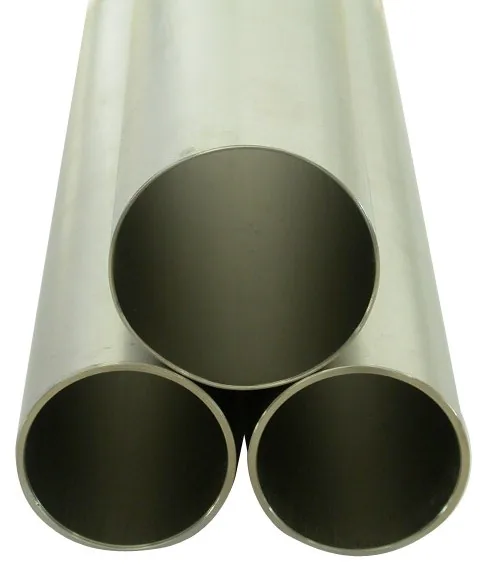
Why titanium wins in heat transfer
A heat exchanger is a corrosion problem wearing a thermal design. The water side of a coastal condenser, a desalination evaporator or a chemical cooler is frequently the most aggressive environment in the whole plant, and it is attacking the thinnest component in the unit — the tube wall.
- Chloride immunity at ambient temperature. Stainless tube pits and crevice-corrodes in seawater; titanium's passive oxide film is stable in chlorides, so tube failure rates drop dramatically.
- No general corrosion allowance needed. Designers thin the wall because they do not have to budget for metal loss, which partly offsets titanium's higher cost per metre.
- Cleaner surfaces stay clean. A smooth, uncorroded bore resists fouling and scaling, so thermal performance holds between cleanings.
- Long intervals between retubes. Retubing costs far more than the tube. The common industrial reason to choose titanium is not material life but outage avoidance.
Typical tube specification range
| Parameter | Typical range covered | Note |
|---|---|---|
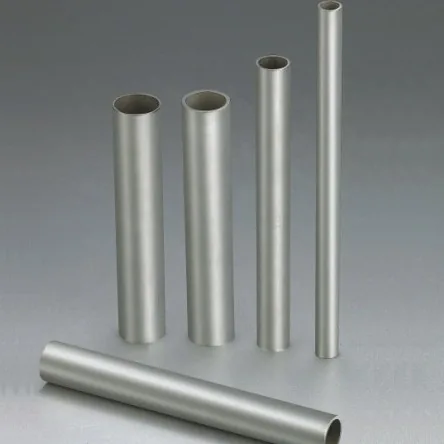
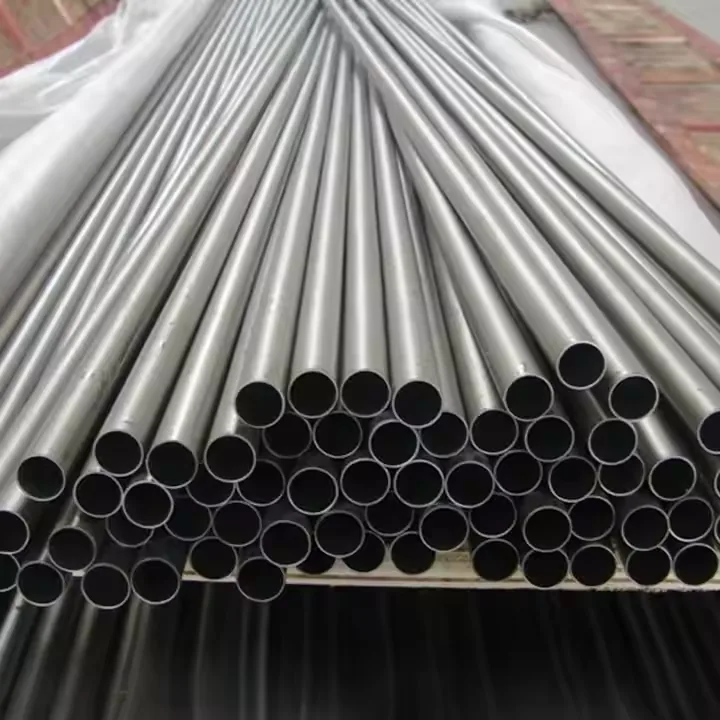
| Outside diameter | 20 – 60 mm | Smaller sizes down to φ3 mm available — see the tube page |
| Wall thickness | 0.6 – 3.0 mm | Thin wall is normal; state the minimum wall you can accept |
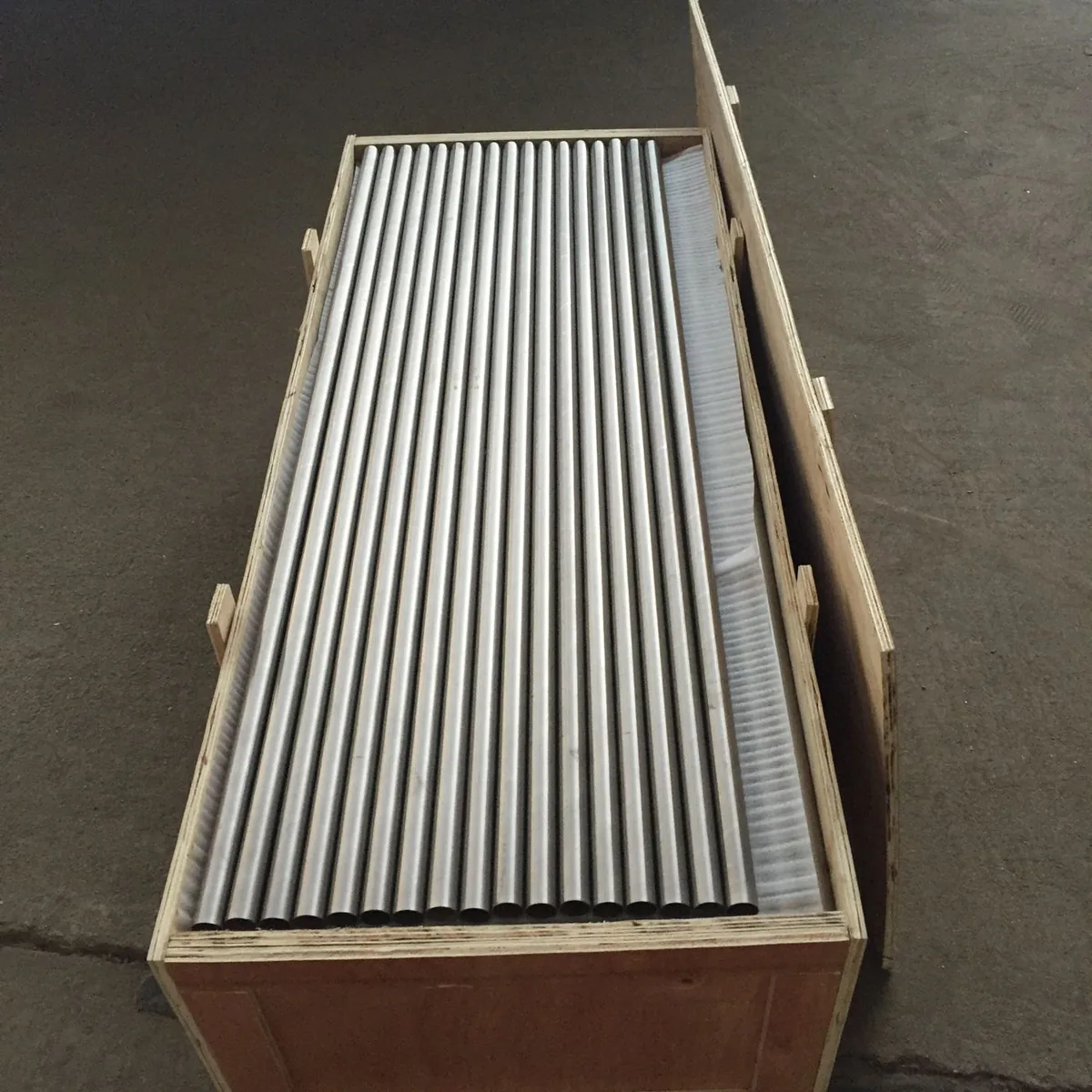
| Length | up to 8000 mm | Fixed lengths supplied; state the tolerance you can work to |
| Grade | Grade 1 and Grade 2 | Grade 1 where the tube must expand into the tube sheet |
| Standard | ASTM B338 / ASME SB338 | State the revision if your specification calls one up |
| Supply condition | Annealed | As agreed at order |
Sizes, testing arrangements and timing for a specific enquiry are confirmed in the quotation — please contact us for confirmation.
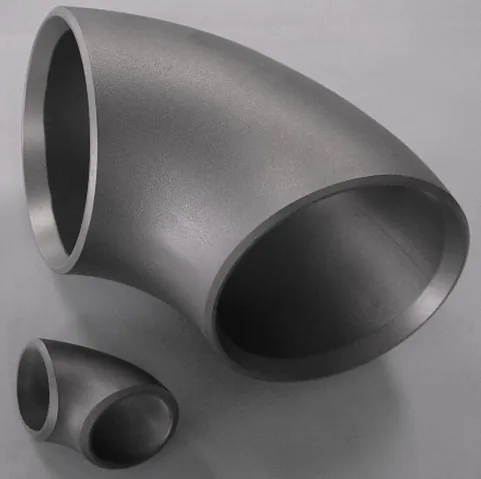
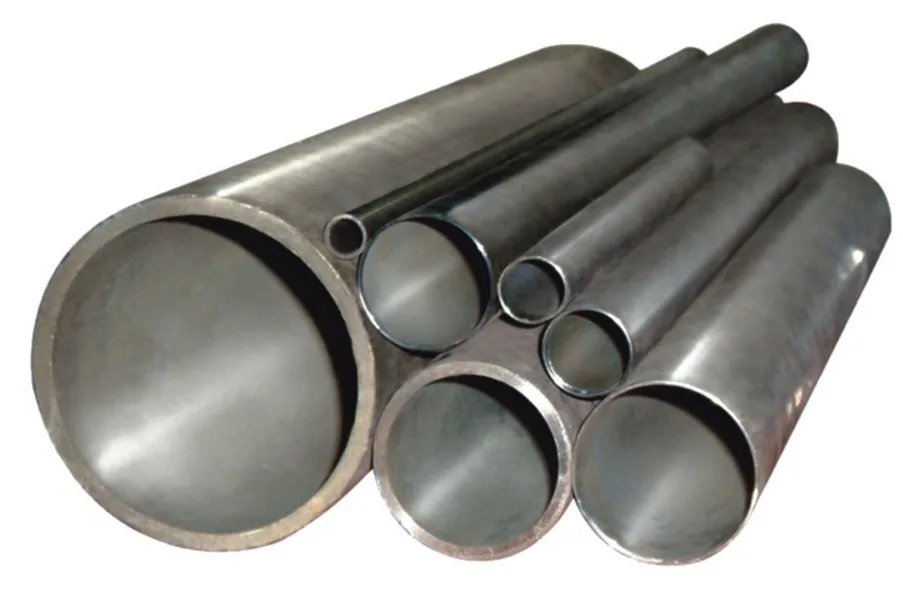
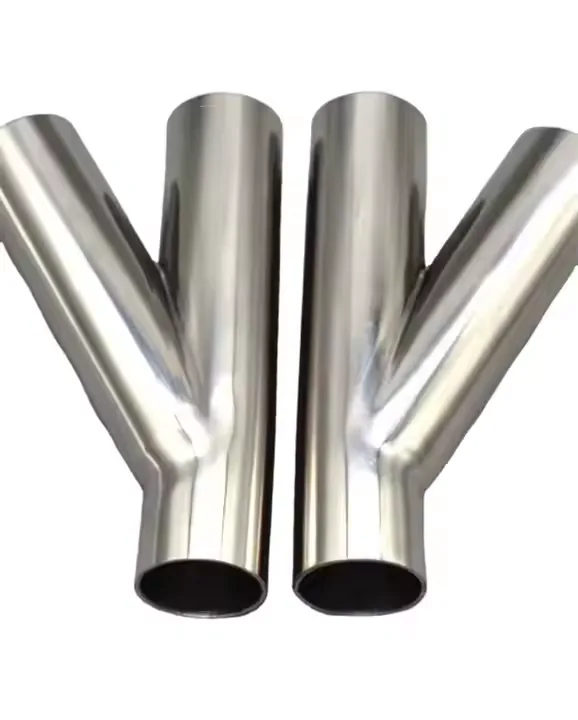
The full downstream range including pipe sizes, capillary tube and fittings is covered on the titanium tube and pipe page.
Standards and the testing they call for
ASTM B338 covers both seamless and welded titanium tube for condensers and heat exchangers, and it sets the tests that accompany the material. Knowing what those tests are helps you specify them correctly rather than asking for a generic “test certificate”.
| Test | What it detects | Specified when |
|---|---|---|
| Hydrostatic test | Through-wall leakage and gross defects by pressurising the tube | Standard practice for pressure-retaining tube |
| Eddy-current test | Surface and near-surface discontinuities along the tube length | Where specification calls for non-destructive examination of the full length |
| Ultrasonic test | Wall-thickness variation and embedded defects | Heavier wall tube or where the standard requires it |
| Flattening and flare tests | Ductility of the material and soundness under deformation | Routine qualification tests under the standard |
The tests called for depend on the standard and the order. They are performed at the production base, and the results appear on the mill documentation supplied with the shipment.
Three situations we are asked about
Shipboard and coastal condensers
A seawater-cooled condenser retube. The buyer usually knows the tube schedule but needs the grade confirmed and the length cut to match the existing tube sheet. Grade 2 is the default; Grade 1 is specified when the expansion method needs more ductility. Related: marine and seawater service.
Plate heat exchanger packs and gasketed units
Here the enquiry is usually for thin sheet rather than tube, plus gasket-compatible plate material. Provide the plate thickness and flatness requirement; see plate and sheet.
Evaporator and brine heater tube
The wall sees hot brine, so the grade question usually becomes Grade 2 versus Grade 12 and the crevice geometry matters. See Grade 12 titanium and desalination plant supply.
Documentation for a retube
A retube usually has to satisfy a plant QA system, not just the buyer. Alongside the mill test report we can coordinate heat-to-lot traceability so that tubes in a bundle can be traced to a heat number, plus packing lists keyed to lengths. Third-party inspection before dispatch is arranged where the project requires it.
What the document set contains, field by field →
Enquiry template
Copy the template below into an email or WhatsApp message. Filling in every line lets us quote on the first pass without a round of questions.
Copy-paste enquiry template
Product:      Heat exchanger tube, seamless
Standard:     ASTM B338 (state revision if applicable)
Grade:        Grade 2  (alternative: Grade 1 / Grade 12)
Quantity:     ______ metres  (or ______ pieces)
OD x wall:    ______ mm x ______ mm
Length:       ______ mm, fixed length ? tolerance ______ mm
End finish:   square cut / deburred / bevelled
Testing:      hydrostatic / eddy current / ultrasonic / flattening
Documents:    MTC EN 10204 3.1 / other ______
Third party:  not required / SGS / BV / other ______
Application:  ______
Destination:  country ______ / port ______
Incoterm:     FOB / CIF / DAP / DDP
Required by:  ______
Have a tube schedule already drawn up? Send it as-is — a schedule is a better enquiry than a description.
WhatsAppSend your specificationRequest heat exchanger tube
Send OD, wall, length, grade, quantity and the tests your specification calls for. If the unit already has a specification sheet, send that instead and it will be quoted against it.
WhatsApp +86 157 0603 0959 · WhatsApp +86 151 9196 1431 · tockson@163.com