Standards map by product form
Titanium specifications are organised by product form rather than by grade, which is why one order can legitimately reference three or four different specifications. Knowing which governs which is half the battle when reading a drawing.
| Product form | ASTM specification | ASME equivalent | GB/T specification |
|---|---|---|---|
| Plate, sheet, strip | ASTM B265 | ASME SB265 | GB/T 3621 |
| Bar and billet | ASTM B348 | ASME SB348 | GB/T 2965 |
| Seamless and welded condenser tube | ASTM B338 | ASME SB338 | GB/T 3625 |
| Seamless pipe | ASTM B861 | ASME SB861 | GB/T 3624 |
| Welded pipe | ASTM B862 | ASME SB862 | — |
| Wire | ASTM B863 | — | GB/T 3623 |
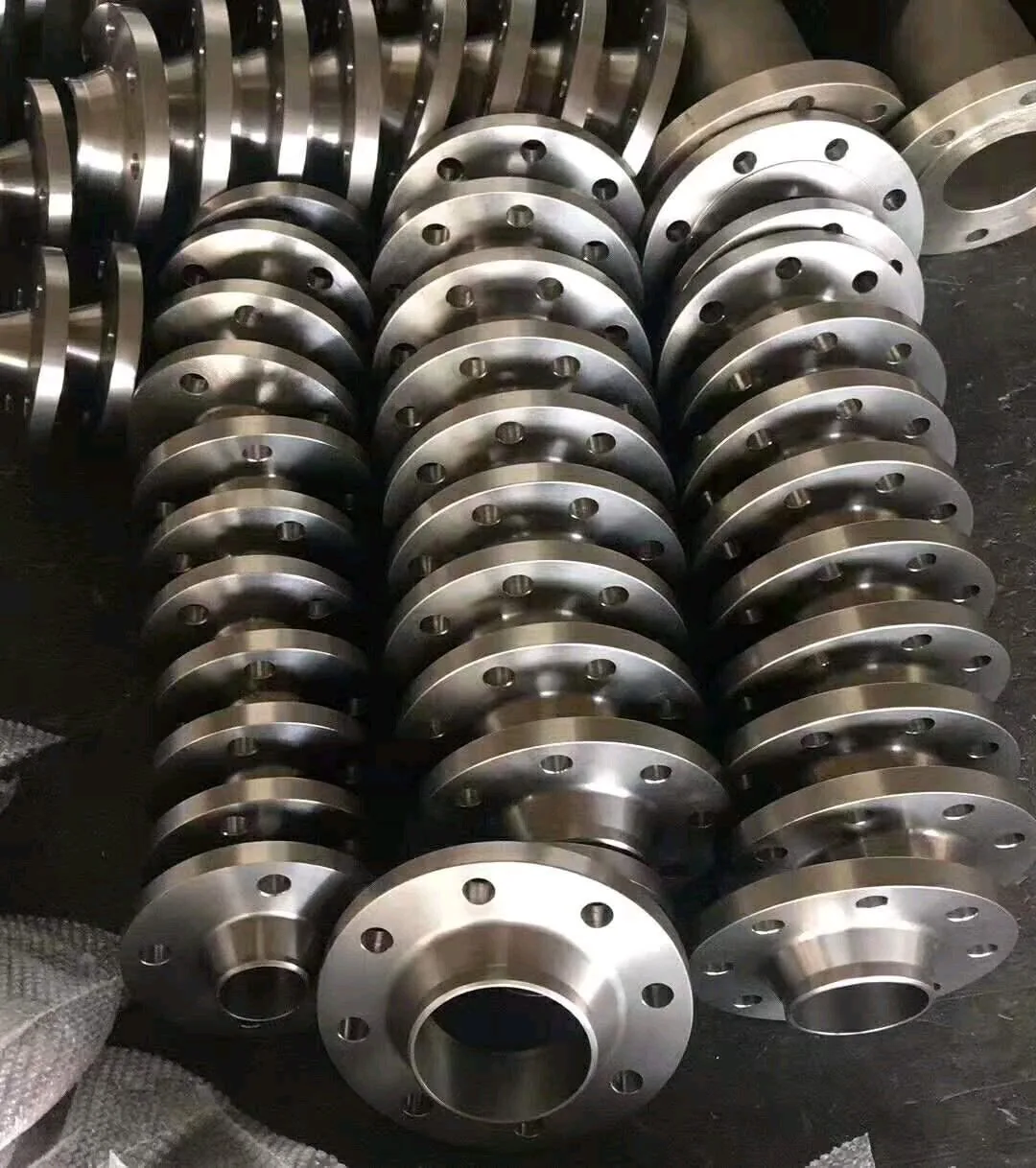
| Forgings | ASTM B381 | ASME SB381 | GB/T 16598 |
| Castings | ASTM B367 | — | GB/T 6614 |
| Fasteners | ASTM F467 / F468 | — | GB/T related specs |
This table is a route map, not a substitute for the standard. Each specification is revised periodically, and only the edition in force at order time governs the material.
ASTM B265 versus ASME SB265
They cover the same material with largely the same requirements. The distinction is institutional: ASTM publishes materials specifications, while ASME's boiler and pressure vessel codes adopt many of them with an SB prefix to indicate their place in that code structure.
- Use B265 when the component is outside the scope of the ASME codes — most general fabrication.
- Use SB265 when the component falls under ASME code design, such as a pressure vessel built to Section VIII Division 1.
- Do not assume interchangeability on code work. Where a code job specifies SB, ordering plain B may not satisfy the documentation review.
Aerospace and implant specifications
Two further families appear regularly on drawings and are worth recognising.
- AMS 4911 — titanium alloy sheet, strip and plate, Ti-6Al-4V annealed. Widely referenced in aerospace work.
- AMS 4928 — titanium alloy bars, wire, forgings and rings, Ti-6Al-4V annealed.
- ASTM F136 — wrought Ti-6Al-4V ELI for surgical implant manufacture.
- ASTM F67 — unalloyed titanium for surgical implant applications.
These are material specifications. Where approvals are involved, ask directly: we will state plainly what we can and cannot supply.
GB, DIN and cross-referencing
Cross-reference tables circulate widely and are useful for reading an unfamiliar drawing. They are also frequently over-trusted, because the composition windows in different national standards rarely match exactly.
| ASTM grade | GB/T | Werkstoff number | Note |
|---|---|---|---|
| Grade 1 | TA1 | 3.7025 | Closest available equivalents; windows differ |
| Grade 2 | TA2 | 3.7035 | Most frequently cross-referenced pair in trade |
| Grade 3 | TA3 | 3.7055 | Less commonly specified |
| Grade 4 | TA4 | 3.7065 | Check oxygen limit differences |
| Grade 5 | TC4 | 3.7164 / 3.7165 | Ti-6Al-4V across all three systems |
| Grade 7 | TA9 | — | Palladium-bearing grade |
| Grade 9 | TA18 | 3.7195 | Ti-3Al-2.5V |
| Grade 12 | TA10 | 3.7105 | Ti-0.3Mo-0.8Ni |
| Grade 23 | TC4 ELI | — | ELI grade; verify against ASTM F136 or B348 as named |
These equivalences are approximate and used routinely in trade. Before substituting a designation on a coded job, verify the limits in both specifications. Note that copyright restricts reproducing the text of any standard.
Revision and edition pitfalls
Specifications are revised, and old drawings referencing an old revision are common. Three things go wrong in practice.
- A superseded edition is called up and nobody notices until document review. Since many revisions adjust minor details this may pass, but it should be a conscious decision.
- No edition is stated at all, which leaves the effective standard to interpretation. Always state the revision you intend.
- Two different specifications are referenced for one order, typically on multi-form packages. Each item should carry the specification appropriate to its form.
What EN 10204 certificates cover
European buyers commonly specify an EN 10204 certificate type, and the three types have different meanings that are often confused.
| Type | What it declares | Issued by |
|---|---|---|
| 2.1 | Statement of compliance with the order, without test results | Supplier |
| 2.2 | Test report with results from non-specific inspection | Supplier |
| 3.1 | Inspection certificate with test results, from specific inspection of the supplied batch | Supplier's authorised inspection representative, independent of manufacture |
| 3.2 | As 3.1, plus confirmation by a third party named by the customer | Supplier plus third party |
Type 3.1 is the common requirement in European trade; type 3.2 involves third-party involvement beyond routine testing and is usually specified for project work.
How this is arranged in practice, and what else goes in a shipment, is described on the quality and documentation page.
How we quote against customer standards
Buyers arrive with the standards they are used to, and that is how we quote. Recent enquiries we have worked against have referenced DIN, ASTM and AMS specifications, including aerospace material specifications and European national standards. None is a problem in principle.
Send the standard and revision your drawing calls for — we will quote against exactly that rather than substituting our own.
WhatsAppSend your specificationQuote against your standard
Give us the specification and revision, or simply send the drawing clause. If you are unsure which standard applies to a form, ask and we will tell you which one governs it.
WhatsApp +86 157 0603 0959 · WhatsApp +86 151 9196 1431 · tockson@163.com