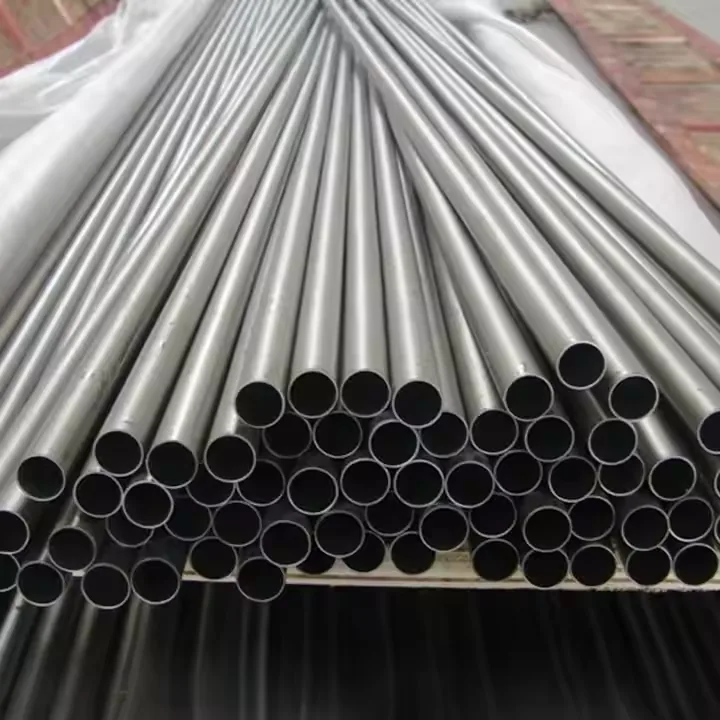
Overview
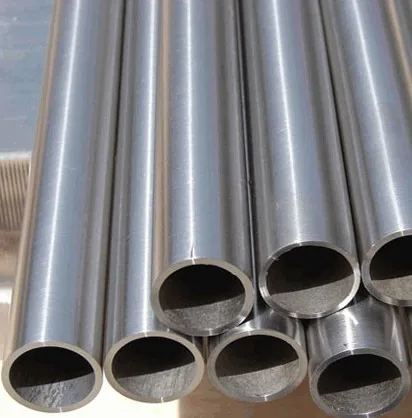
Titanium tube is the highest-value form we quote and the one with the most exacting requirements. Almost all of it goes into heat transfer: power station and shipboard condensers, chemical plant coolers, and desalination evaporators and brine heaters. In those duties the wall thickness, the roundness and the integrity of the tube are what determine whether the exchanger works.
Seamless and welded tube are not interchangeable. Getting the choice right in the enquiry stage saves a redesign later.
Seamless versus welded
| Seamless | Welded | |
|---|---|---|
| Production | Pierced and drawn from solid billet | Strip formed and longitudinally welded, then sized |
| Size range we quote | φ3 – φ219 mm (larger on request), wall 0.5 – 20 mm | φ16 – φ325 mm, wall 0.5 – 8 mm |
| Typical use | Heat exchangers, condensers, high-pressure and high-integrity service | General piping, structural tube, lower-pressure service |
| Wall uniformity | Very uniform, no weld | Weld seam present; weld quality is the controlling factor |
| Cost | Higher | Lower, particularly at large diameter |
| Standards | ASTM B338, B861 | ASTM B862 |
Ranges shown are what we quote; the final feasible combination of OD, wall and length is confirmed in the quotation.
Specifications
| Product | Outside diameter | Wall | Length |
|---|---|---|---|
| Seamless tube | φ3 – φ219 mm (to φ600 mm on request) | 0.5 – 20 mm | up to 8000 mm for small OD |
| Welded tube | φ16 – φ325 mm | 0.5 – 8 mm | per order |
| Heat-exchanger tube | φ20 – φ60 mm | 0.6 – 3.0 mm | up to 8000 mm |
| Capillary tube | φ0.8 – φ6 mm | thin wall | coil or straight |
Where a figure depends on the specific order it is confirmed in the quotation — please contact us for confirmation.
Standards
- ASTM B338 — the specification for seamless and welded titanium and titanium alloy tubes for condensers and heat exchangers. This is the standard most heat-exchanger enquiries call up.
- ASTM B861 — seamless titanium pipe for general service.
- ASTM B862 — welded titanium pipe for general service.
- ASTM B863 — titanium wire (see the wire page).
- ASME SB338 — the ASME designation of B338 where the exchanger is code-stamped.
The naming difference between ASTM and ASME designations is explained in the standards guide.
Heat-exchanger tube
A regular part of our tube enquiries. Heat-exchanger tube is quoted in Grade 1 and Grade 2 for most duties, with Grade 12 where the tube side sees hot brine or where crevice corrosion is a concern. The φ20 – φ60 mm outside diameter band with 0.6 – 3.0 mm wall suits most shell-and-tube designs we are asked for, and lengths to 8000 mm reduce the number of joints in the bundle. Other combinations are available upon specification confirmation.
More on titanium for heat exchangers, including a copy-paste RFQ template →
Capillary tube
Small-diameter tube down to φ0.8 mm is used in instrumentation, sensing lines and fine cooling circuits. Because the wall is thin relative to the diameter, cleanliness and end condition matter as much as the dimensions — state both in the enquiry.
Testing per standard
The order standard determines what testing is performed. In practice the tests that appear on heat-exchanger tube orders are:
- Hydrostatic test — pressure testing of the tube or pipe to verify integrity, performed at the production base to the pressure the standard and your order specify.
- Eddy-current test — an electromagnetic scan of the tube wall that detects discontinuities. Common on condenser and heat-exchanger tube.
- Ultrasonic test — used for wall-thickness verification and internal defect detection, typically on heavier wall or pipe.
- Flattening, flaring and reverse-flattening — mechanical tests that verify ductility, which matters when the tube will be rolled into a tube sheet.
- Dimensional and visual inspection — OD, wall, length, straightness and surface condition.
Lengths and end preparation
Tube is supplied in random or fixed lengths as ordered, with the cut ends square and deburred. Bevelled ends, plastic end caps and internal cleaning can be specified. Random length is more economical; fixed length costs more but removes cutting from your workshop. Bending radius, straightness and ovality requirements should be stated in the enquiry, because they constrain which production route can be used.
Fittings: elbows, bends and square tube
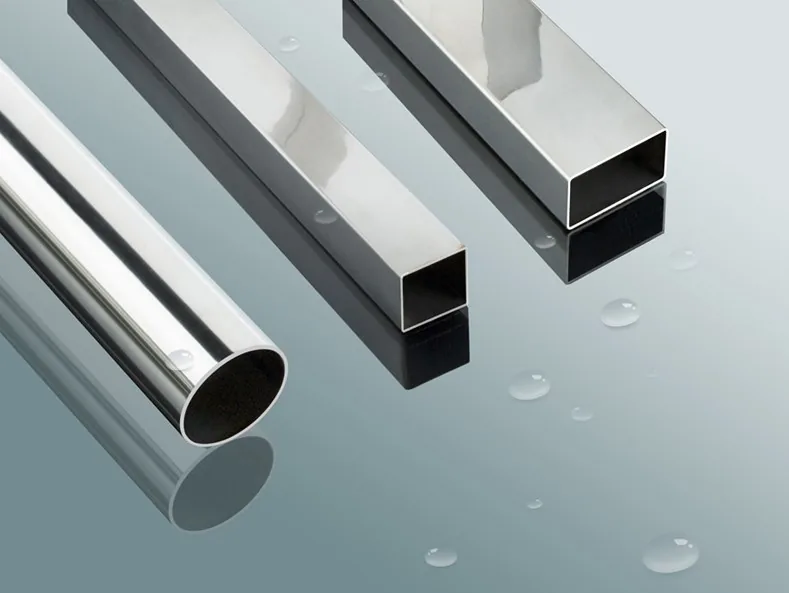
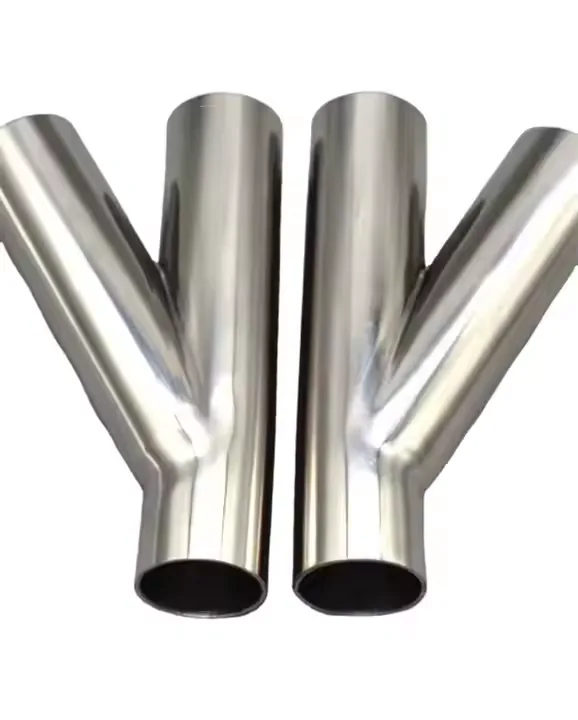
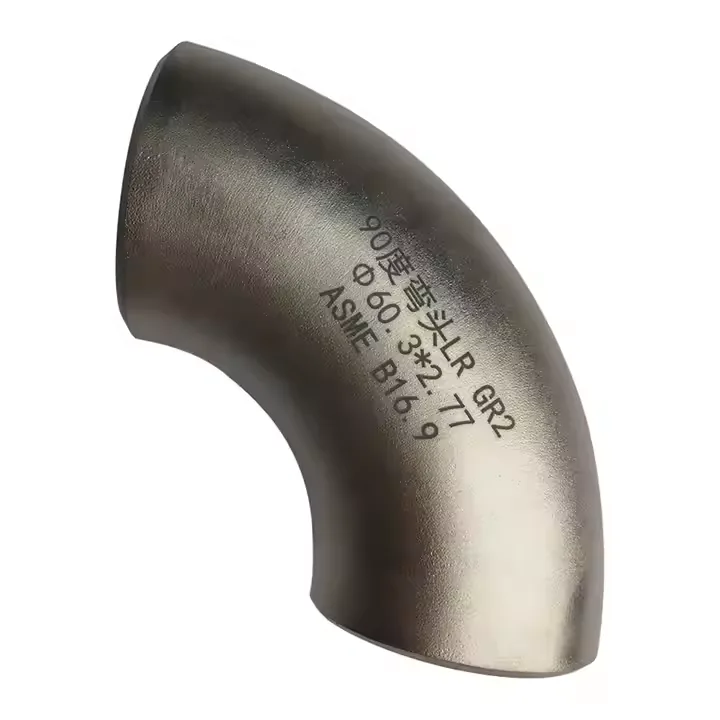
Tube and pipe are rarely installed as straight runs. Butt-weld and socket elbows, cold-bent pipe and square or rectangular tube are all quotable alongside the straight material, which means a fabrication package can be sourced as one order rather than as tube from one supplier and fittings from another.
Gallery
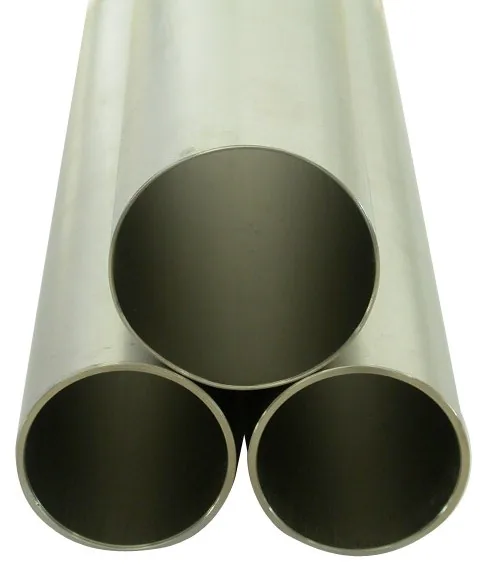
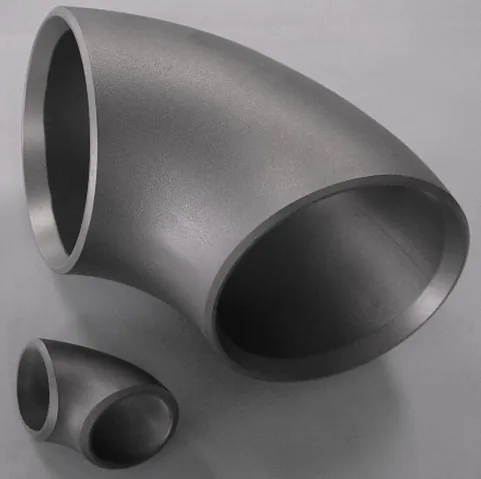
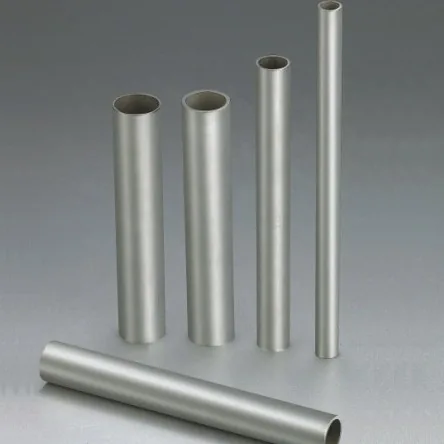
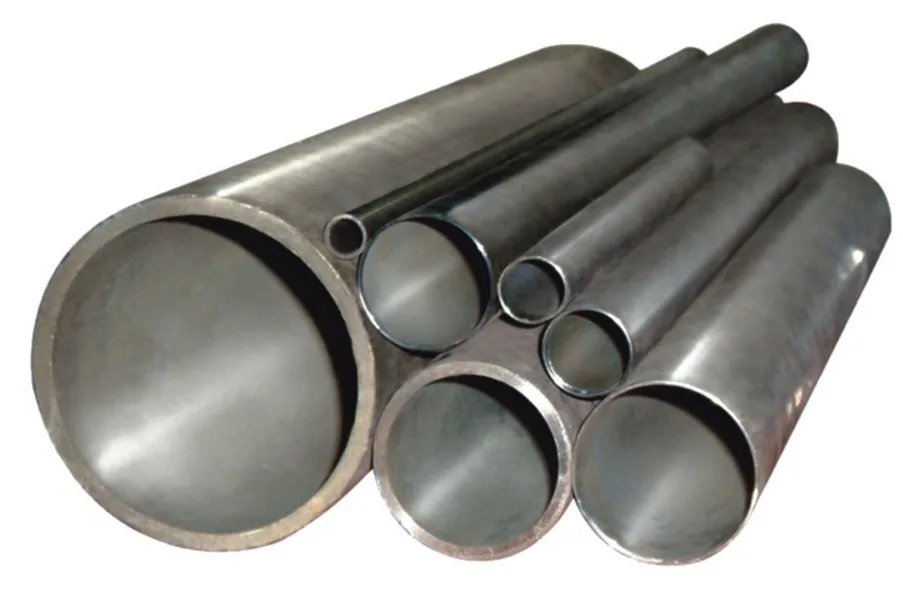
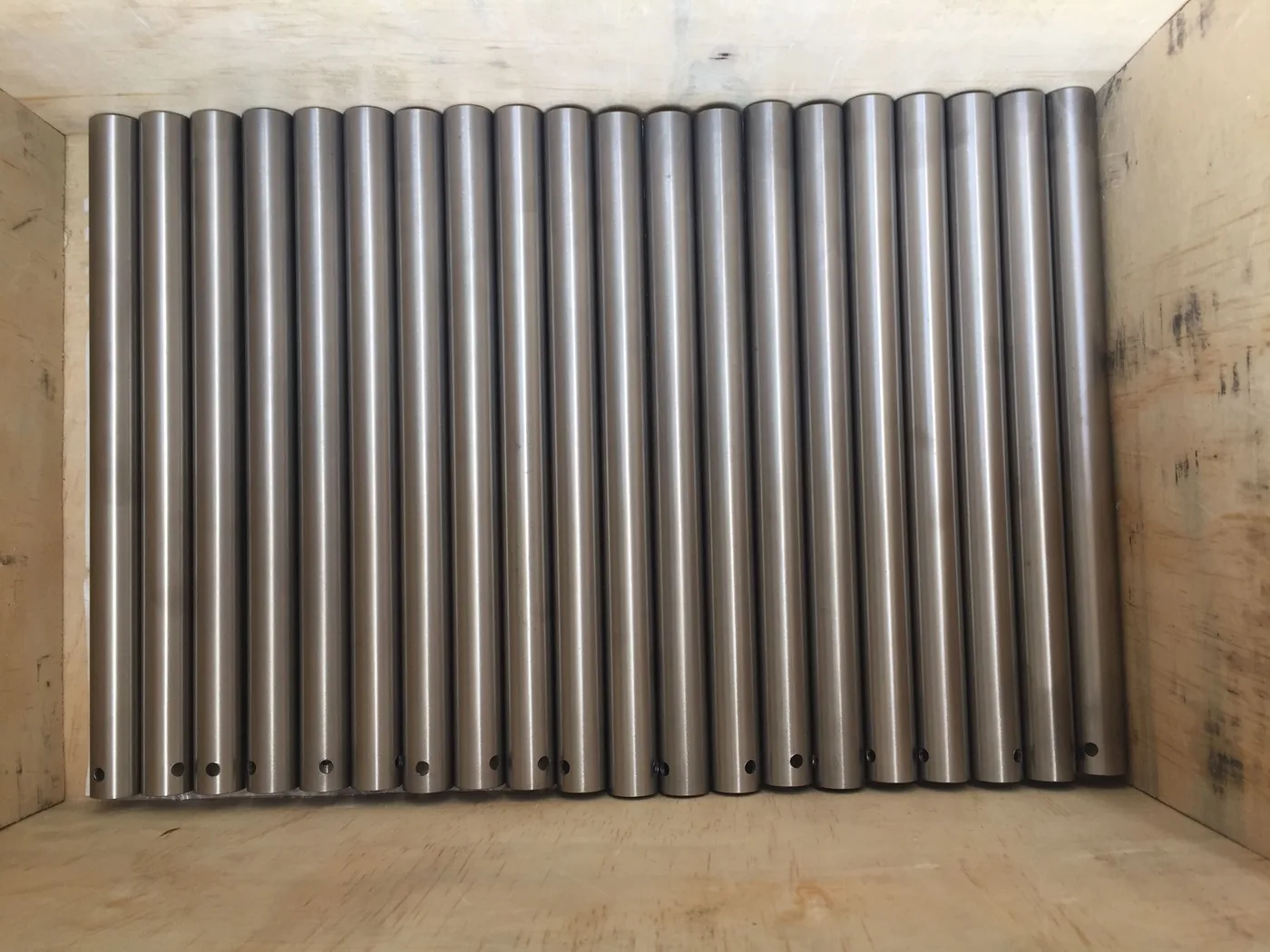
Send your tube schedule — OD, wall, length, quantity and standard — and we will quote it in one offer.
WhatsAppSend your specificationRequest a tube quotation
For heat-exchanger tube, include the outside diameter, wall thickness, length, quantity, grade and the standard with its revision. If the tube will be rolled into a tube sheet, say so — it affects which mechanical tests are relevant.
WhatsApp +86 157 0603 0959 · WhatsApp +86 151 9196 1431 · tockson@163.com