Why seawater service favours titanium
Marine engineers usually arrive at titanium by elimination. Copper-nickel suffers erosion-corrosion at high velocity and is sensitive to sulphide pollution; stainless steels pit and crevice-corrode in chloride; coatings need maintenance and eventually fail at edges and welds.
- Immunity to chloride pitting and crevice attack at ambient temperature. The passive film is stable in oxygenated seawater, including under deposits and in crevices.
- High velocity tolerance. Titanium handles the flow velocities that erode copper alloys, allowing smaller bore and higher heat-transfer rates.
- Ammonia and sulphide tolerance. Polluted harbour water that attacks copper alloys leaves titanium unaffected.
- Weight. Roughly 45% lighter than copper-nickel and well below steel, which matters aboard ship and on topsides.
- Life-cycle cost. Not the cheapest to buy; frequently the cheapest per year of service once retubing and downtime are counted.
Which grade, and when to move off Grade 2
| Service | Grade normally specified | Why |
|---|---|---|
| Ambient seawater piping and cooling water | Grade 2 | Immune at ambient temperature; the economical choice |
| Seawater-cooled condenser and heat exchanger tube | Grade 2, sometimes Grade 1 | Grade 1 where expansion into the tube sheet needs more ductility |
| Hot seawater, brine heater, evaporator above about 70 °C | Grade 12 | Better crevice resistance when hot |
| Loaded fasteners, shafts and stress-loaded hardware | Grade 5 | 895 MPa where strength governs the design |
Component map for a marine package
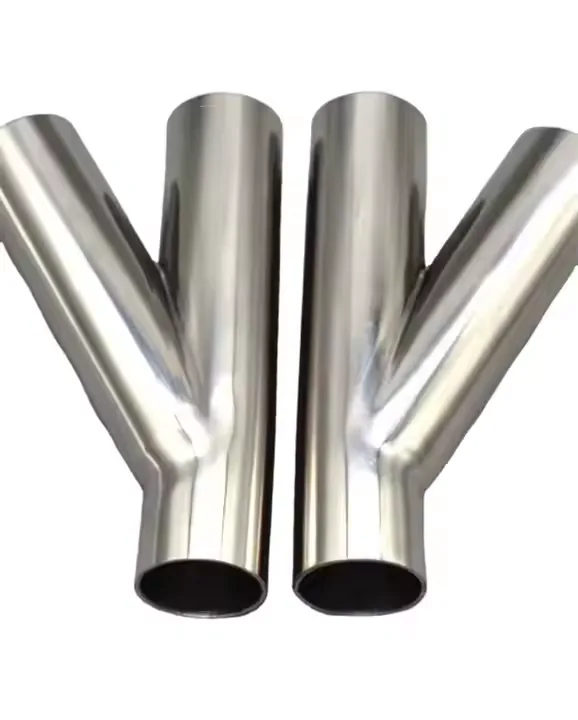
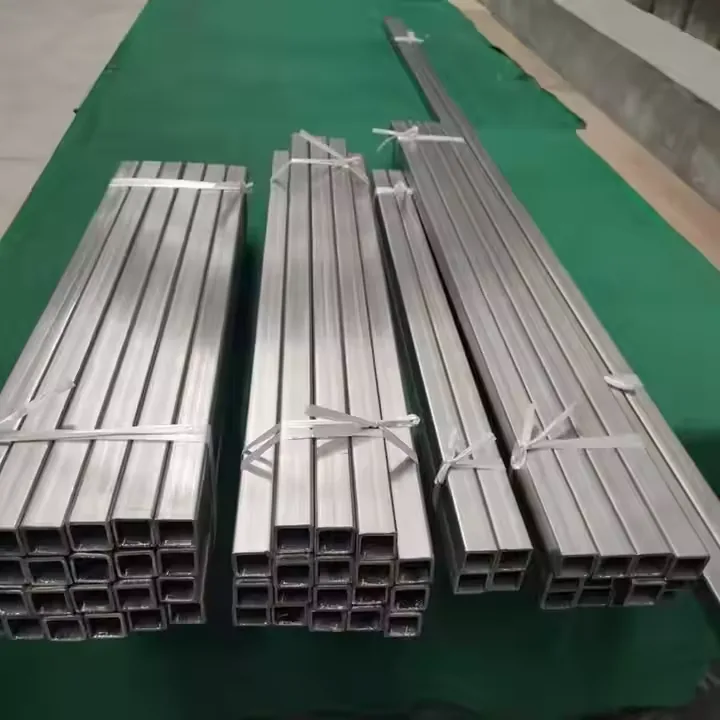
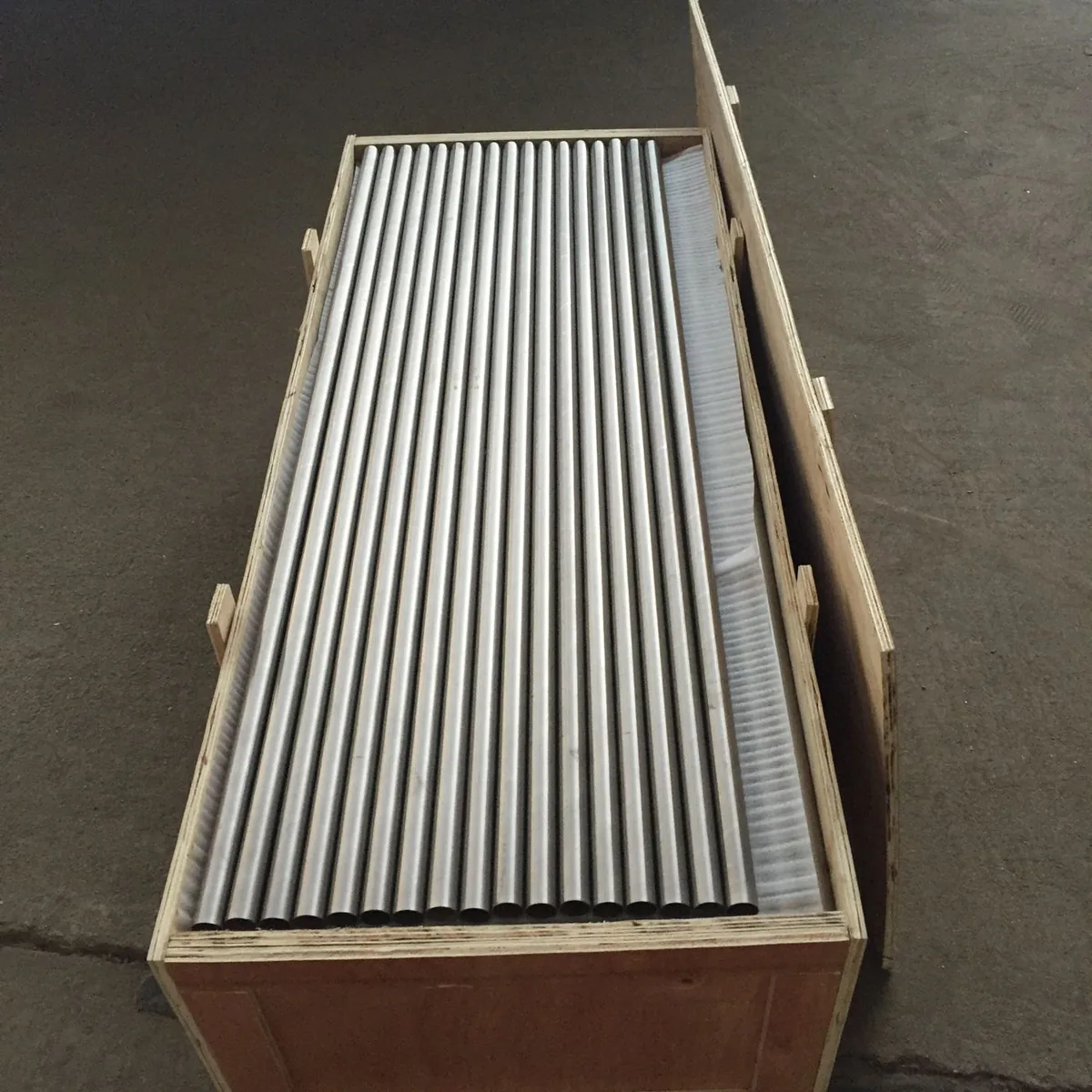
Seawater piping
Straight runs, cold bends and spools in Gr2.
Tube & pipe →
Condenser and cooler tube
The core of most retube enquiries.
Heat exchanger tubes →
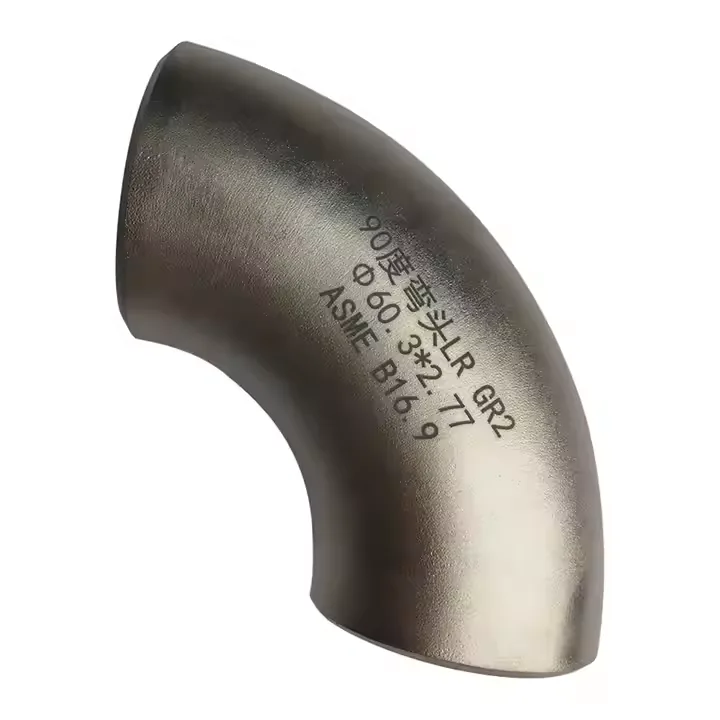
Fittings, elbows and bends
Matching the pipe specification, including returned bends.
Tube & pipe →
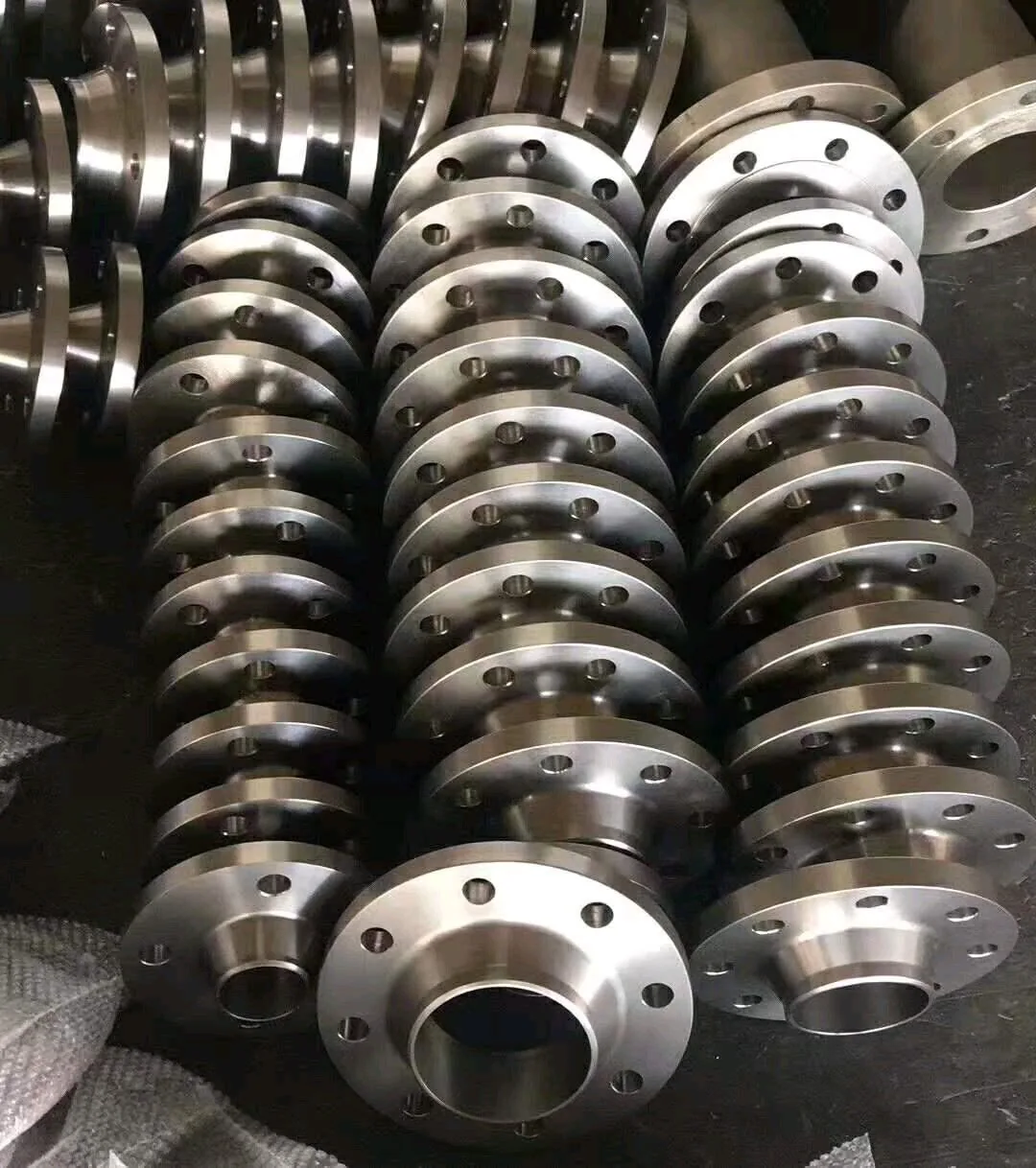
Flanges and couplings
Weld neck, slip-on and blind to the required class.
Flanges →
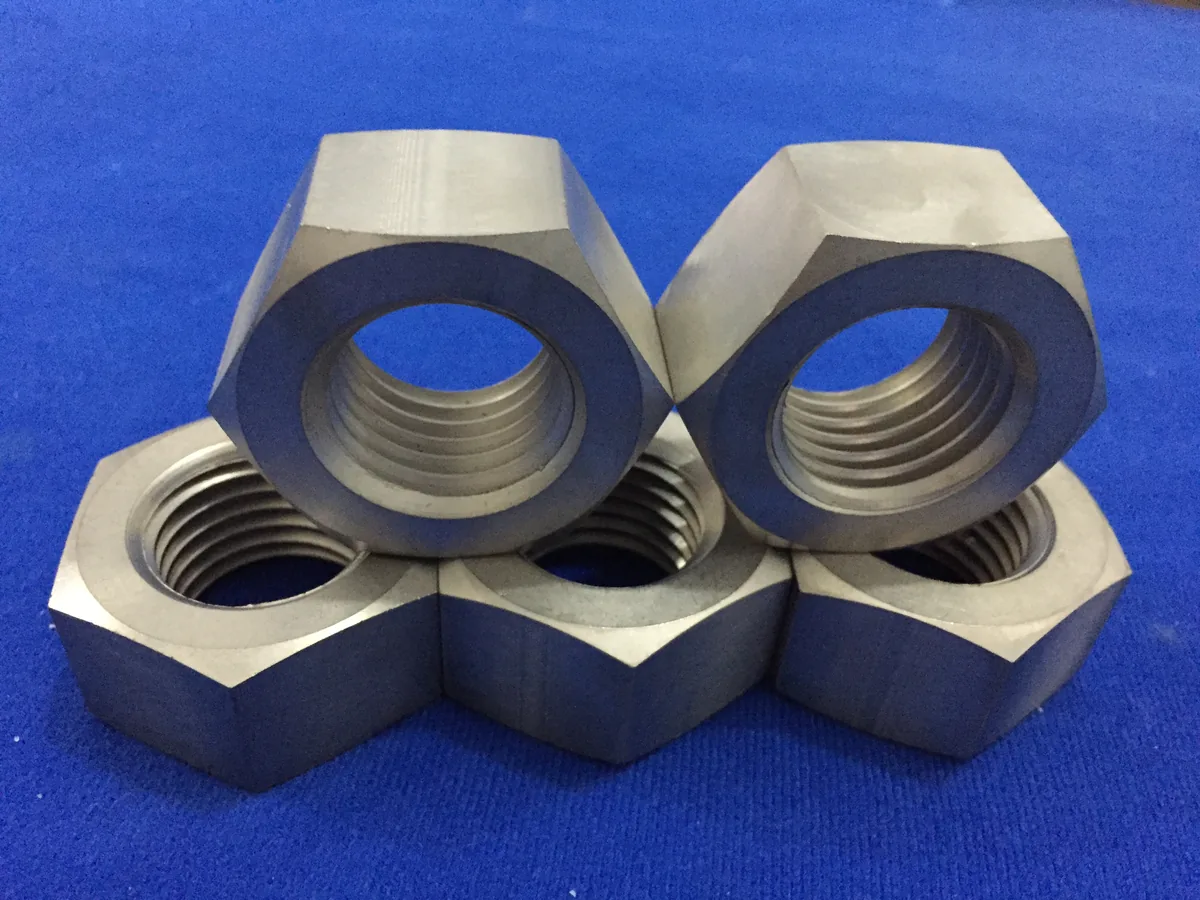
Fasteners
Bolts, studs, nuts and threaded rod for seawater-side joints.
Fasteners →
Structural plate and brackets
Sea chests, strainer bodies, seabed frames and fabricated assemblies.
Plate & sheet →
Galvanic corrosion — the question that always comes up
Titanium is noble. Joined electrically to aluminium, zinc or mild steel in a seawater circuit, it drives corrosion of the other metal. Every titanium-to-steel joint on the seawater side needs isolation: insulating gaskets, sleeves around bolt shanks and insulating washers. Titanium itself will be fine; the hull or the steel flange nearby will not be.
The practical approach used in yards: isolate every dissimilar joint, or make both sides titanium.
Repeat orders to European fabricators
A recurring part of our work has been repeat supply of titanium bar and machined parts to a European welding fabricator, ordered against DIN references. The point worth making is not volume but the pattern: repeat orders arrive because the paperwork and the material matched on the first delivery, and the second enquiry therefore did not need re-qualifying.
Classification societies
Shipboard work under a classification society such as DNV or Lloyd's Register typically requires material to be documented and sometimes witnessed. What we do is coordinate documentation: supply material to the ordered standard, provide traceable mill documentation, and support the certification package your project assembles.
Enquiry template
Copy-paste enquiry template
Service:      seawater / ______   operating temp ______ degC
Component:    piping / tube / flange / fastener / plate / ______
Grade:        Grade 2  (or specify ______)
Standard:     ASTM B338 / B265 / B348 / ______ (state revision)
Dimensions:   ______
Quantity:     ______
Fabrication:  straight lengths / cold bends / to drawing (attach file)
Isolation:    insulating gaskets required yes / no
Documents:    MTC / third-party inspection ______ / other ______
Destination:  country ______ / port ______
Required by:  ______
Retubing or building new? Send the component list and the operating temperature and we will quote in Grade 2 unless the duty says otherwise.
WhatsAppSend your specificationRequest a marine quotation
Tell us the components, the operating temperature and the seawater chemistry if it is unusual. Marine enquiries are usually time-sensitive, so WhatsApp is the fastest channel.
WhatsApp +86 157 0603 0959 · WhatsApp +86 151 9196 1431 · tockson@163.com